
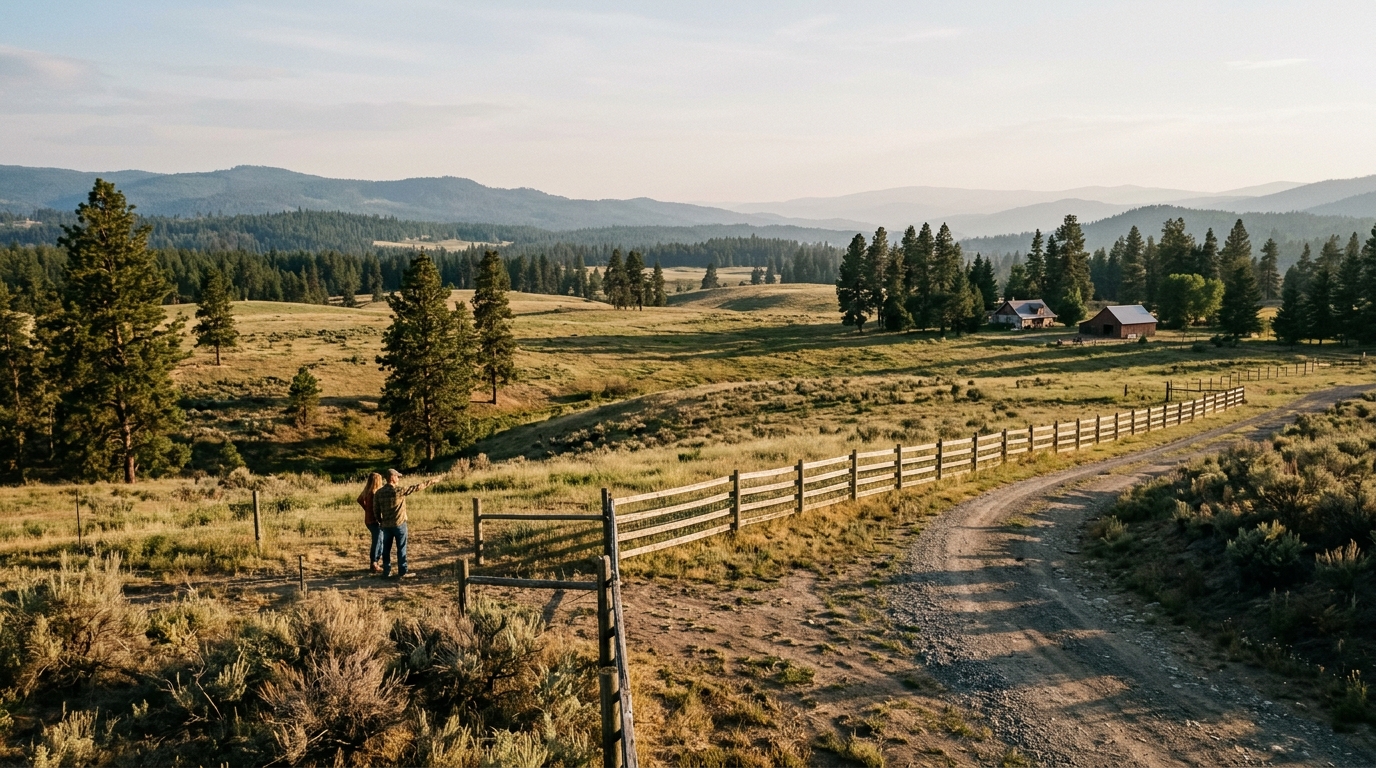
Buying rural acreage in Eastern Washington and North Idaho requires understanding local zoning, water rights, and access laws that differ significantly from urban real estate. Buyers should verify utility availability and legal access before making an offer. This guide outlines the critical factors you must investigate to avoid costly surprises after closing.
Understanding Zoning and Land Use Restrictions
Zoning is the legal framework that dictates how a specific parcel of land can be used. In rural areas of Eastern Washington and North Idaho, zoning often determines whether you can build a primary residence, operate a farm, or keep livestock. Many buyers assume that owning land grants them the right to build anything they want, but local county planning departments enforce strict setbacks and density limits. For example, a 10-acre parcel in a specific zone in Spokane County may only allow one dwelling unit with a minimum setback of 50 feet from the property line. You must review the current zoning map and any overlay districts that might apply to the property. Ignoring these restrictions can leave you with land that cannot support your intended use. For additional details, review the Frequently Asked Questions.
Water Rights and Utility Availability
Water rights is a legal entitlement to use water from a specific source, which is distinct from simply having a well. In arid regions of Eastern Washington, water rights are often senior and limited, meaning you may not be able to drill a new well or expand irrigation without purchasing existing rights. In North Idaho, while water is more abundant, well capacity and water quality testing are still critical. You should verify if the property has a functioning well, a septic system, or access to municipal utilities. If the land relies on a shared well or a private water district, you need to understand the financial obligations and maintenance responsibilities. A property without reliable water access is significantly harder to develop and may have lower resale value.
Legal Access and Easements
Legal access is the right to enter and exit a property via a public road or a recorded easement. Many rural listings in North Idaho and Eastern Washington are landlocked, meaning they have no direct frontage on a public street. These properties often rely on a private road or an easement across a neighbor's land. You must verify that the easement is recorded in the county recorder's office and that it is not revocable. If the access road is private, you may be part of a road association that requires annual dues for maintenance. Failing to secure clear, permanent access can make your property inaccessible during winter or legal disputes. Always confirm the legal description of the access route in the title report.
Topography and Soil Conditions

Working with Local Real Estate Experts
Key Takeaways
- Zoning determines what you can build on the land, so verify local regulations before making an offer.
- Water rights are a separate legal entitlement from well ownership, and they are critical in arid regions.
- Legal access must be recorded and permanent to ensure you can enter and exit the property.
- Topography and soil conditions significantly impact construction costs and feasibility.
- Local real estate agents have the expertise to navigate complex rural land transactions.
- Always hire independent professionals like engineers and surveyors to assess the land.
- Understanding these factors helps you avoid costly mistakes and find the right property.
Frequently Asked Questions
What is the difference between water rights and well ownership?
Water rights is the legal permission to use a specific amount of water from a source, while well ownership is the physical right to the well structure. You can own a well but not have the water rights to use it, or you can have water rights but no well. In Eastern Washington, water rights are often the most valuable asset on a rural property.
How do I verify legal access to a landlocked property?
You should review the title report and the county recorder's office to ensure that an easement or private road agreement is recorded. The easement must be non-revocable and clearly defined in the legal description. If the access is not recorded, you should not buy the property without securing a new agreement.
Can I build a house on any rural acreage?
No, you cannot build on any rural acreage. Zoning laws, setback requirements, and soil conditions determine where and what you can build. Some parcels are zoned for agricultural use only and do not allow residential construction. You must verify the zoning and consult with a local planner before planning a build.
Why is local expertise important for buying rural land?
Local expertise is important because rural land markets have unique regulations and community norms that differ from urban areas. Local agents understand the specific water rights, zoning changes, and access issues in their region. They can help you navigate these complexities and find properties that meet your needs.
What should I check before making an offer on rural land?
You should check the zoning, water rights, legal access, topography, and soil conditions. You should also review any existing easements, covenants, or restrictions. Hiring a civil engineer or geotechnical specialist to assess the land is highly recommended before making an offer.
Conclusion
Buying rural acreage in Eastern Washington and North Idaho is a significant investment that requires careful planning and local knowledge. By understanding zoning, water rights, access, and topography, you can make informed decisions and avoid costly mistakes. Contact a local real estate professional today to start your search for the perfect acreage property. Learn more: gblood kellyrightrealestate com.