

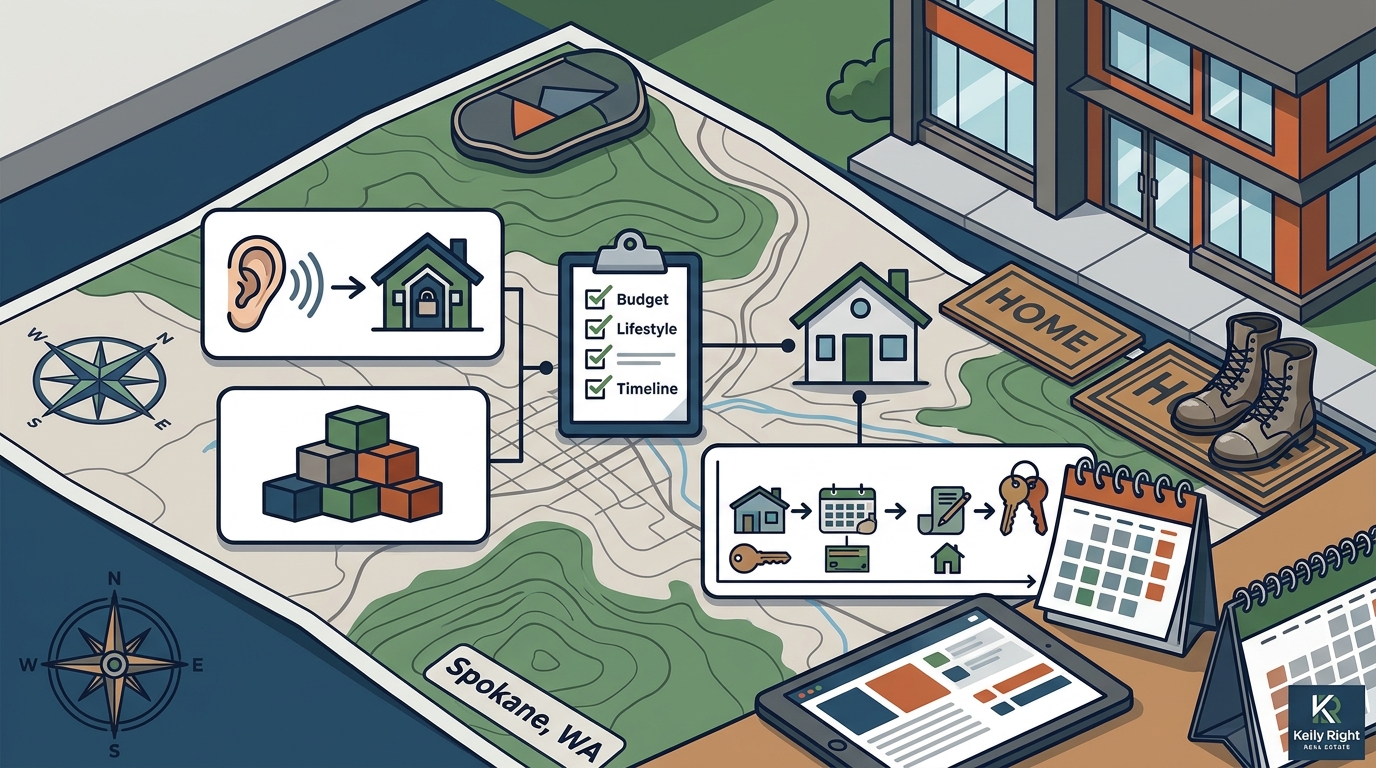
Choosing a buyer agent in Spokane requires more than checking license status. You need a professional who actively listens to your specific needs. Kelly Right Real Estate, represented by Guye Blood, focuses on this exact communication dynamic. A true listener validates your budget, lifestyle, and timeline before showing homes. This approach prevents wasted time and reduces buyer stress during the search. For additional details, review the gblood kellyrightrealestate com.
Active Listening vs. Passive Agreement
Active listening is the practice of fully concentrating on a speaker to understand, process, and respond to their message. Many agents practice passive agreement, where they nod along without challenging assumptions. This distinction matters in the Spokane market. If you mention a strict budget cap, a passive agent might show homes slightly over that limit. An active listener will ask why that cap exists and explore alternatives that fit your financial reality. For additional details, review the .
Questioning Techniques That Reveal Engagement
Effective agents use open-ended questions to uncover hidden priorities. They ask about your daily routine, commute patterns, and long-term plans. This technique reveals whether the agent is building a profile of your needs. For example, an agent might ask how you plan to use the backyard. The answer might reveal a need for a fenced area for pets. Or it might show a desire for a low-maintenance landscape. For additional details, review the Customer Experience.
Pay attention to how the agent follows up. If you mention a concern about noise levels, a good agent will note it. They will check flight paths or traffic patterns before scheduling a tour. This follow-through proves they are retaining information. It demonstrates that your input directly influences their search strategy. You should feel that your words are shaping the process, not being ignored. For additional details, review the Frequently Asked Questions.
Communication Cadence and Responsiveness
Responsiveness is a key indicator of an agent's commitment to listening. A buyer agent should reply to messages within a reasonable timeframe. In the Spokane real estate market, timing can be critical. New listings often receive multiple offers quickly. An agent who listens will communicate these opportunities promptly. They will explain the pros and cons of each option clearly.
Set expectations for communication frequency at the start. Ask how often they will send updates. Do they prefer email, text, or phone calls? Aligning on these preferences ensures you do not miss important information. It also shows the agent respects your time. A professional who listens will adapt to your preferred channel. They will not force you into a communication style that feels intrusive or distant.
Evaluating Empathy and Market Knowledge
Empathy is the ability to understand and share the feelings of another. In real estate, empathy helps agents navigate the emotional highs and lows of buying. They recognize when you are excited and when you are overwhelmed. This emotional intelligence builds trust. It allows the agent to guide you through difficult decisions with care.
Combine empathy with local market knowledge. A Spokane buyer agent should understand neighborhood nuances. They know which areas are appreciating and which are stable. They can explain why a specific home is priced a certain way. This knowledge, paired with empathy, creates a powerful partnership. The agent listens to your fears and addresses them with data. This balance of heart and head is rare and valuable.
Key Takeaways
- Active listening involves processing and responding to your specific needs, not just nodding along.
- Open-ended questions help agents uncover hidden priorities like commute times or lifestyle preferences.
- Follow-through on specific concerns, like noise or layout, proves the agent is retaining information.
- Align on communication frequency and preferred channels to ensure timely updates on new listings.
- Empathy combined with local market knowledge creates a balanced and trustworthy partnership.
- Test the agent's responsiveness early in the process to gauge their commitment.
Frequently Asked Questions
How can I tell if an agent is truly listening?
What is the difference between passive and active listening?
Passive listening involves hearing words without engaging with the underlying meaning. Active listening requires the agent to interpret, clarify, and respond to your needs. An active listener will challenge assumptions and ask for clarification when needed.
How often should my buyer agent communicate with me?
Frequency depends on your preference and the market pace. In a competitive market, daily updates may be necessary. In a slower market, weekly summaries might suffice. Establish this cadence early to avoid frustration or information overload.
Why is empathy important in a buyer agent?
How does local market knowledge affect listening?
Local knowledge allows the agent to interpret your needs in context. For example, if you want a quiet street, a knowledgeable agent knows which neighborhoods offer that. They can explain the trade-offs of different areas. This context helps them listen more effectively to your lifestyle goals.
What should I do if my agent is not listening?
Address the issue directly and specifically. Provide examples of times when your input was ignored. Ask for a change in communication style or search strategy. If the behavior continues, consider switching agents. Your time and money are too valuable to waste on a poor fit.
Conclusion
Finding a Spokane buyer agent who listens is about observing their actions, not just their words. Look for active engagement, clear communication, and genuine empathy. Kelly Right Real Estate, with Guye Blood, exemplifies this standard. To start your search with an agent who prioritizes your voice, contact Guye Blood today.