

7 Key Factors That Differentiate Eastern Washington and North Idaho Land Markets
Eastern Washington and North Idaho share a border, yet their land markets operate under distinct economic and regulatory frameworks. Buyers often assume these regions are interchangeable, but differences in water rights, zoning, and infrastructure create unique opportunities and challenges. Understanding these specific market dynamics is essential for making informed investment decisions in the Pacific Northwest. according to Dryland Farming Organic For additional details, review the gblood kellyrightrealestate com.
1. Water Rights and Availability
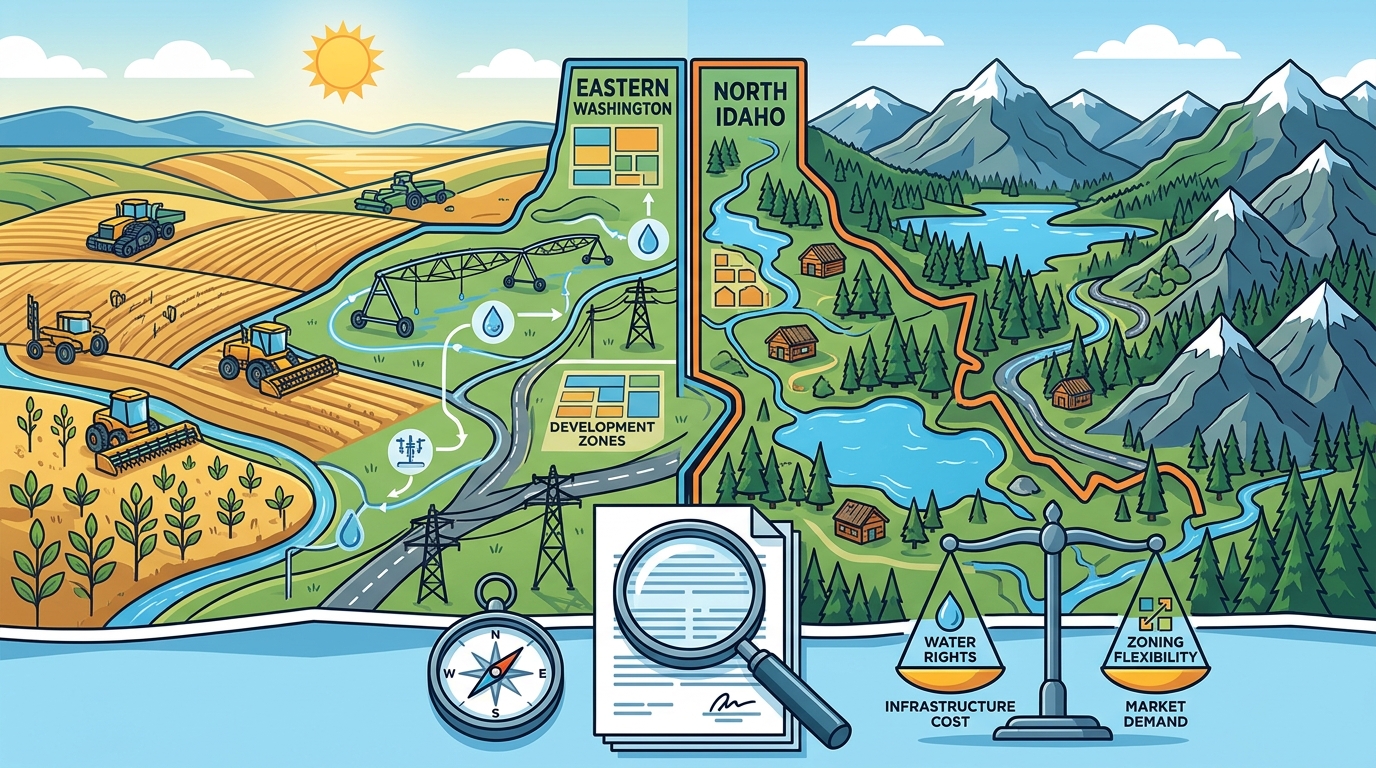
Water rights are the primary determinant of land value in Eastern Washington, whereas North Idaho relies more heavily on surface water access. In Eastern Washington, water rights are often senior and well-established, making them a critical asset for agricultural and residential use. North Idaho land frequently depends on seasonal surface water, which can limit year-round utility. Buyers must verify the specific water rights attached to any parcel in either region to avoid future usage restrictions.
2. Zoning and Land Use Regulations
Eastern Washington counties tend to have stricter zoning overlays for rural development compared to North Idaho. Many Eastern Washington jurisdictions enforce minimum lot sizes that are larger than those found in North Idaho counties. This regulatory difference impacts the feasibility of subdividing land for residential lots. Prospective buyers should consult local planning departments to understand specific setback and density requirements.
3. Infrastructure and Utility Access
4. Agricultural Land Value Drivers
5. Recreational and Lifestyle Appeal
6. Property Tax Structures
Property tax rates and assessment methods differ between Washington and Idaho, affecting the total cost of land ownership. Washington State property taxes are generally higher than those in Idaho, which can impact the long-term holding costs of land. Buyers should calculate the total annual tax burden based on the assessed value and local tax rates. Understanding these differences is vital for accurate budgeting and investment analysis. according to Excerpt Inventing Idaho
7. Market Liquidity and Buyer Pools
Choosing the Right Market for Your Goals
Frequently Asked Questions
Is it easier to subdivide land in North Idaho or Eastern Washington?
North Idaho often has more flexible zoning for rural subdivision, but specific county regulations apply. Eastern Washington may have stricter minimum lot size requirements. Always check local zoning codes before purchasing land for subdivision purposes.
Do water rights transfer with the land in both states?
Water rights generally transfer with the land in both Washington and Idaho, but they are separate legal entities. You must verify that the water rights are properly documented and transferred during the sale process. Failure to do so can result in loss of water access.
Which region has higher property taxes?
Washington State typically has higher property tax rates than Idaho. This can significantly impact the total cost of ownership over time. Buyers should compare the effective tax rates in specific counties before making a decision.
Is land in Eastern Washington more expensive than in North Idaho?
Can I build a home on any land in these regions?
No, building a home requires compliance with local zoning, setback, and utility regulations. Some land may be zoned for agricultural use only, prohibiting residential construction. Verify building permits and zoning classifications before purchasing land for residential use.