

7 Key Steps to Get Licensed as a Real Estate Agent in Washington and Idaho
1. Verify Your Home State License
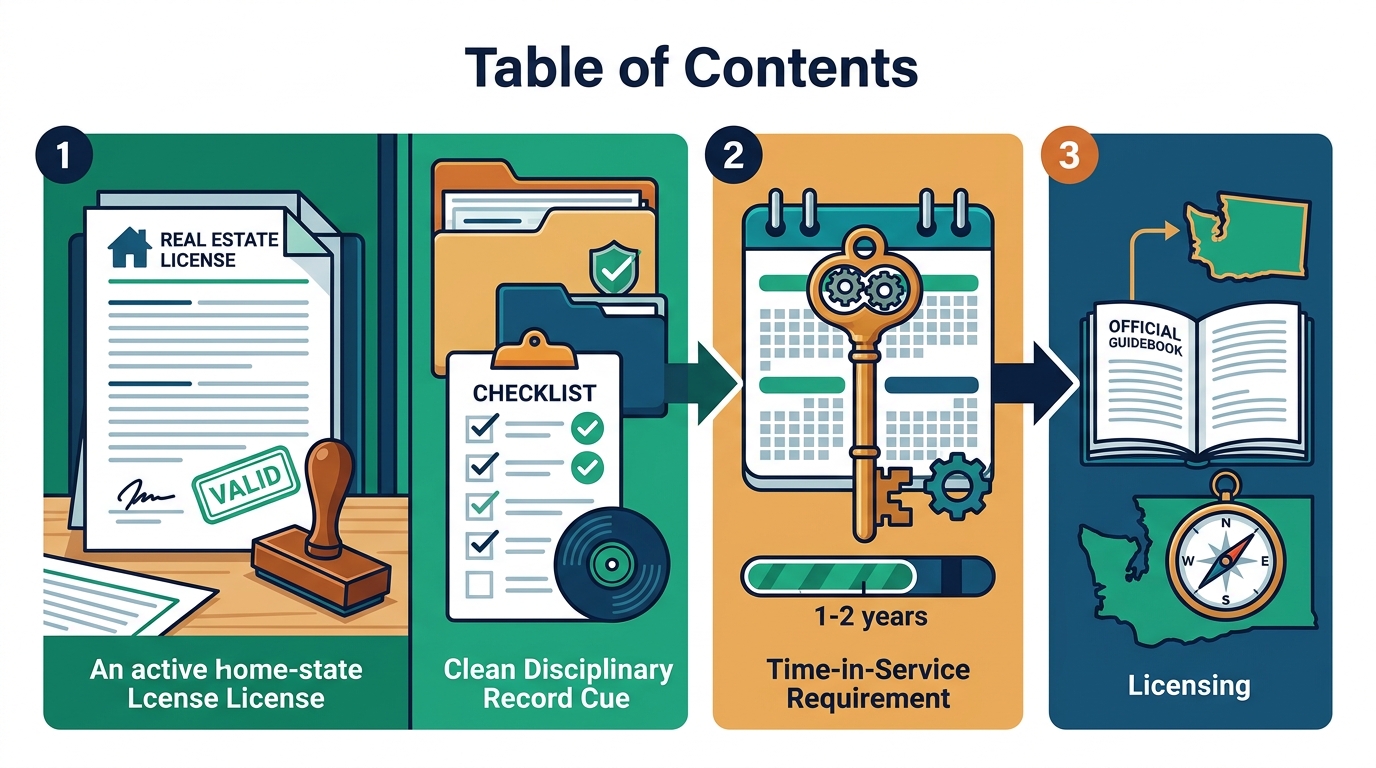
Ensure your primary license is active and in good standing before applying for a second state. Most states require your home-state license to be active for a specific period, often one to two years, before they will consider an out-of-state endorsement. You must also confirm that you have no disciplinary actions or pending complaints on your record. This foundational step prevents application rejections that can delay your cross-border operations significantly. For additional details, review the Customer Experience.
2. Research Reciprocity Agreements
3. Submit the Endorsement Application
File the specific application for a multi-state or out-of-state license with the second state's regulatory body. This application is distinct from a new license application and typically requires proof of your existing license. You will need to submit official transcripts or verification letters from your home state. The application process involves specific forms that must be completed accurately to avoid administrative delays. Paying the correct application fees at this stage is also mandatory to initiate the review process. For additional details, review the Frequently Asked Questions.
4. Complete Required Pre-Licensing Education
Identify and complete any additional education hours required by the second state. Even with reciprocity, the second state may require you to complete specific courses covering their local laws, regulations, and ethical standards. These courses are often shorter than initial pre-licensing education but are mandatory for compliance. You can typically complete these courses online, allowing you to fit the study time into your existing schedule. Ensure the courses are approved by the specific state's licensing board to be valid for your application.
5. Pass the State-Specific Exam
Determine if you must pass a state-specific portion of the real estate exam. Some states waive the national portion of the exam for reciprocal applicants but still require the state-specific portion. This exam covers local statutes, property laws, and regulatory requirements unique to that state. You must schedule and pass this exam before your license can be issued. Studying the specific state's code and regulations is crucial for passing this section of the test.
6. Undergo Background Checks
Submit to a new background check and fingerprinting process for the second state. Each state conducts its own criminal history and background investigation to ensure the safety and integrity of its licensed professionals. This process may take several weeks to complete, so it is important to start it early in the application timeline. You will need to provide fingerprints and pay the associated fees for this check. Any discrepancies in your background check must be resolved promptly to avoid license denial.
7. Activate the License and Join a Brokerage
Activate your new license and affiliate with a sponsoring broker in the second state. In most states, including Idaho, salespersons must be sponsored by a licensed broker to practice real estate. You cannot operate independently without this sponsorship. Once your license is active, you must join a brokerage that operates in that state. This step finalizes your ability to legally conduct real estate transactions in the second state.
Choosing the Right Path
Selecting the appropriate licensing strategy depends on your volume of transactions in each state. If you primarily serve clients in one state with occasional cross-border deals, a reciprocal license is often the most efficient route. Always consult with your compliance officer or legal counsel to ensure you meet all current regulatory requirements before expanding your service area.
Frequently Asked Questions
How long does it take to get a reciprocal real estate license?
The process typically takes 4 to 8 weeks, depending on the state's processing times and the completeness of your application. Background checks and exam scheduling can add additional time to the overall timeline.
Do I need to take the full exam again for a second state?
Usually, you only need to take the state-specific portion of the exam if reciprocity applies. The national portion is often waived for licensed agents applying for an endorsement.
Can I hold licenses in both Washington and Idaho simultaneously?
Yes, you can hold active licenses in both states. You must maintain compliance, including continuing education and renewal fees, in both jurisdictions.
What is the difference between reciprocity and endorsement?
Reciprocity is the agreement between states that allows for reduced requirements. Endorsement is the specific license type you apply for in the second state based on your existing license. according to Board of Social
Do I need a broker in both states?
Yes, you must be sponsored by a licensed broker in each state where you hold an active salesperson license. You cannot practice without a sponsoring broker in either Washington or Idaho.