

Washington and Idaho Real Estate License Requirements for Cross-Border Agents
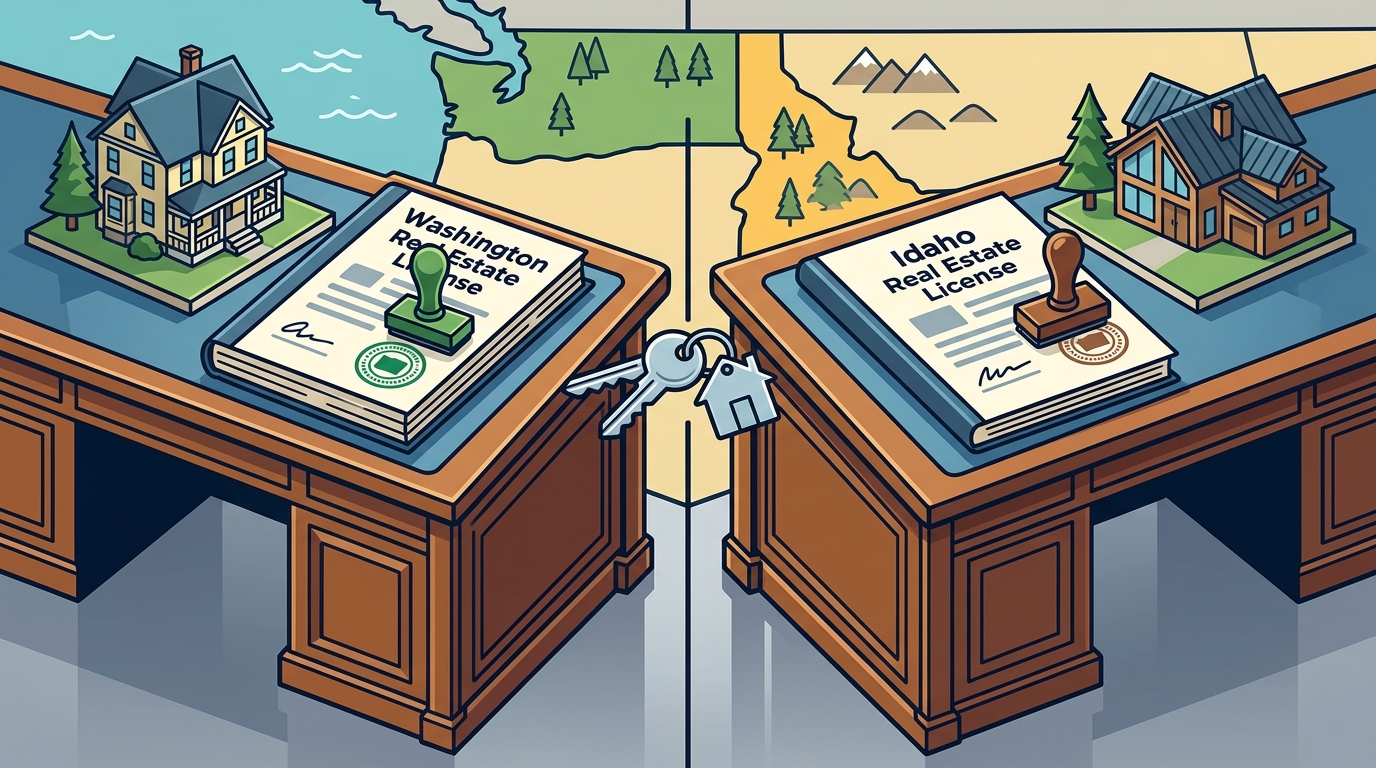
Real estate agents working across the Washington and Idaho border must hold separate, active licenses in both states. There is no single multi-state license that covers both jurisdictions. Each state regulates its own real estate professionals through distinct licensing boards and statutory frameworks. This requirement ensures that agents meet the specific educational, examination, and ethical standards set by each state's regulatory authority. according to Real Estate Brokers For additional details, review the Contact Php.
Understanding State-Specific Licensing Frameworks
Washington State regulates real estate professionals through the Department of Licensing (DOL). The DOL oversees the issuance and renewal of real estate broker and salesperson licenses. In Washington, the regulatory framework is codified in the Washington Administrative Code, specifically Chapter 308-124A, which governs real estate licensing and examination procedures. This chapter outlines the precise requirements for applicants, including pre-licensing education hours and background checks. The state maintains a public database where consumers can verify the status of any professional license, ensuring transparency in the marketplace. For additional details, review the Index.
Idaho operates under a different regulatory structure, managed by the Idaho Real Estate Commission, which functions under the Division of Occupational and Professional Licenses (DOPL). The Idaho Real Estate License Law, found in Title 54, Chapter 20 of the Idaho Code, dictates the rules for brokers and salespersons. A key distinction in Idaho is the recent legislative shift toward biennial licensure, a change that will significantly impact renewal cycles and fee structures for agents in the state. Understanding these distinct frameworks is the first step for any agent considering cross-border work. For additional details, review the Elk.
The Reciprocity Pathway for Washington Agents
For an agent based in Idaho looking to work in Washington, this reciprocity process is the primary route. It streamlines the application by waiving certain educational prerequisites, provided the applicant meets the experience and character requirements. However, it is not an automatic transfer. The applicant must still pass the Washington state law portion of the licensing exam and submit to a new background check. This process ensures that while the foundational knowledge is recognized, the agent is thoroughly vetted for compliance with Washington-specific regulations.
Idaho's Cooperative License for Out-of-State Brokers
This provision is particularly relevant for commercial real estate professionals who occasionally cross the border for specific deals. It provides a legal framework for collaboration without requiring the out-of-state agent to undergo the full Idaho licensing process for a single transaction. However, for agents seeking to build a long-term practice in Idaho, the cooperative license is insufficient. They must pursue a full Idaho salesperson or broker license to operate independently and represent clients in residential and commercial markets across the state.
Practical Implications for Cross-Border Practice
Agents serving clients in both Spokane, Washington, and Boise, Idaho, must navigate the logistical and financial realities of dual licensure. Holding licenses in both states requires maintaining two separate sets of continuing education credits, paying two sets of renewal fees, and complying with two distinct sets of ethical and fiduciary duties. The Idaho DOPL has announced that it will be waiving renewal fees for certain license types, including Broker, Branch Office, Company, and Salesperson, as part of its transition to biennial licensure. This temporary relief may reduce the financial burden for agents during the transition period, but it does not eliminate the need for compliance with both states' ongoing education requirements.
From a practical standpoint, agents must ensure that their brokerage agreements and client disclosures clearly outline their licensing status in each state. Misrepresenting one's licensing authority is a serious violation of real estate law in both Washington and Idaho. Clients in Boise need to know that their agent is properly licensed in Idaho, and clients in Spokane need to know the agent is licensed in Washington. Transparency in this area builds trust and protects the agent from legal liability. For those considering this path, consulting with a local real estate attorney or a compliance specialist is advisable to ensure all procedural steps are correctly followed.
Key Takeaways
- There is no single multi-state license; agents must hold separate, active licenses in both Washington and Idaho.
- Idaho provides a cooperative license for out-of-state brokers, but it is limited to single commercial transactions.
- Idaho is transitioning to biennial licensure, which will change renewal cycles and fee structures for agents.
- Agents must maintain continuing education and pay renewal fees in both states to keep their licenses active.
- Transparency about licensing status in each state is critical for building client trust and avoiding legal issues.
Frequently Asked Questions
Can I use my Washington license to sell homes in Idaho?
No. A Washington license does not authorize you to perform real estate brokerage services in Idaho. You must obtain a separate Idaho license to legally represent clients in Idaho real estate transactions.
What is the difference between a reciprocal license and a cooperative license?
A reciprocal license is a full license in the new state, obtained by recognizing your existing out-of-state license. A cooperative license in Idaho is a limited authorization for an out-of-state broker to work on a single commercial transaction with an Idaho designated broker.
How long does the reciprocity process take in Washington?
The processing time for a reciprocal license in Washington varies depending on the completeness of the application and the review of the out-of-state license. It is advisable to apply well in advance of your intended start date to allow for any necessary background checks or exam scheduling.
Do I need to take the full exam in both states?
Not necessarily. Through reciprocity, you may be exempt from the national portion of the exam if you have already passed it in your home state. However, you will typically still need to pass the state-specific law exam for the new state.
What are the continuing education requirements for dual-licensed agents?
Dual-licensed agents must complete the continuing education requirements for both states. This means tracking and completing CE hours for Washington and Idaho separately, as the courses and requirements are not interchangeable.
Where can I verify if an agent is licensed in both states?
You can verify Washington licenses through the Washington State Department of Licensing's public search tool. For Idaho licenses, you can use the Idaho Division of Occupational and Professional Licenses' license lookup system.